Core runtime
createOndai, the capability router, availability, hooks and small-model helpers in @ondai/core.
createOndai
const ai = createOndai({
  providers: { apple, nano, cloud },
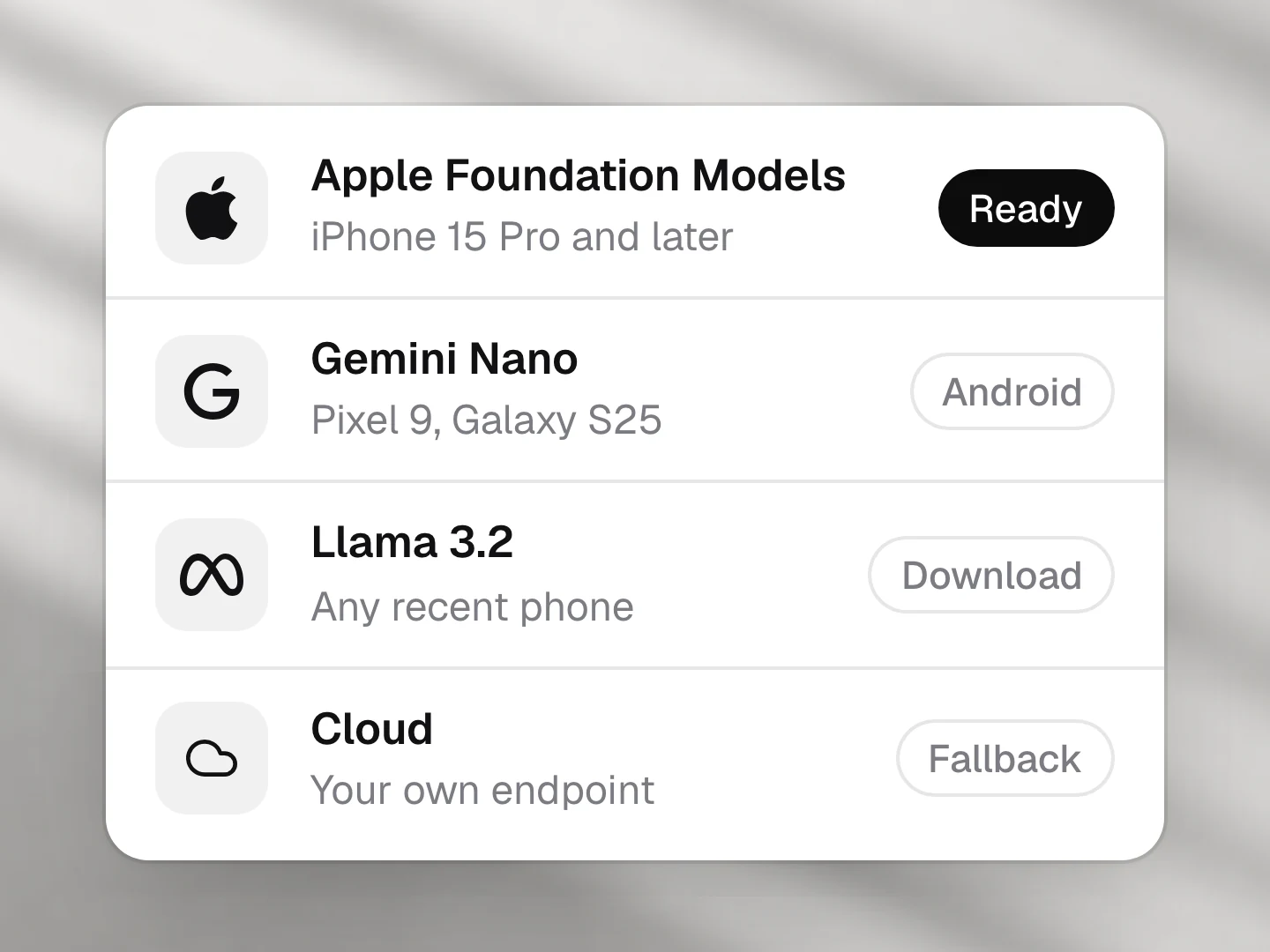
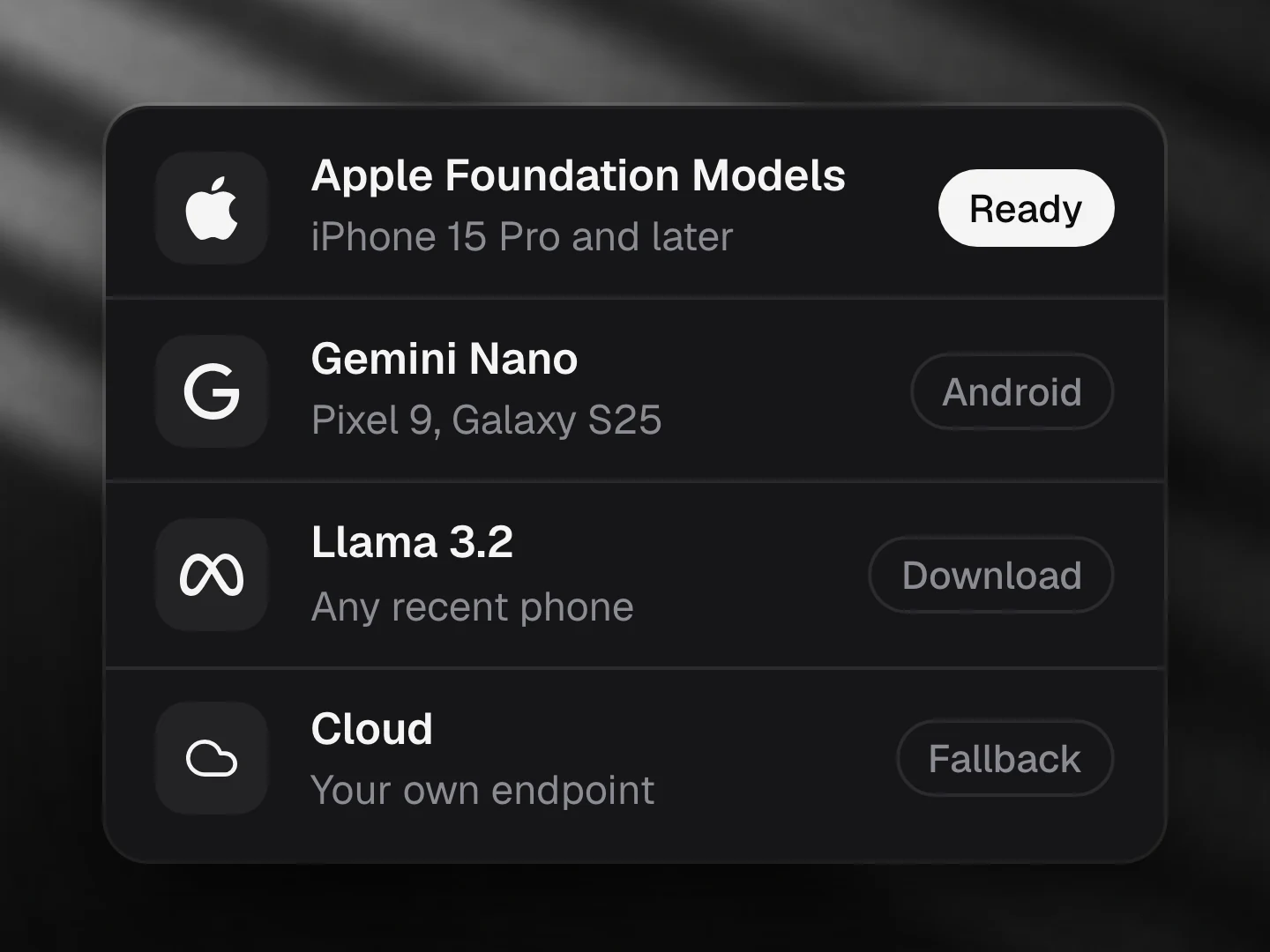
  policy: { order: ['apple', 'nano', 'cloud'], allowCloud: false, prewarm: 'on-focus', tokenBudget: 4096 },
  onMetric: (m) => console.log(m), // local only; Ondai never sends anything
})
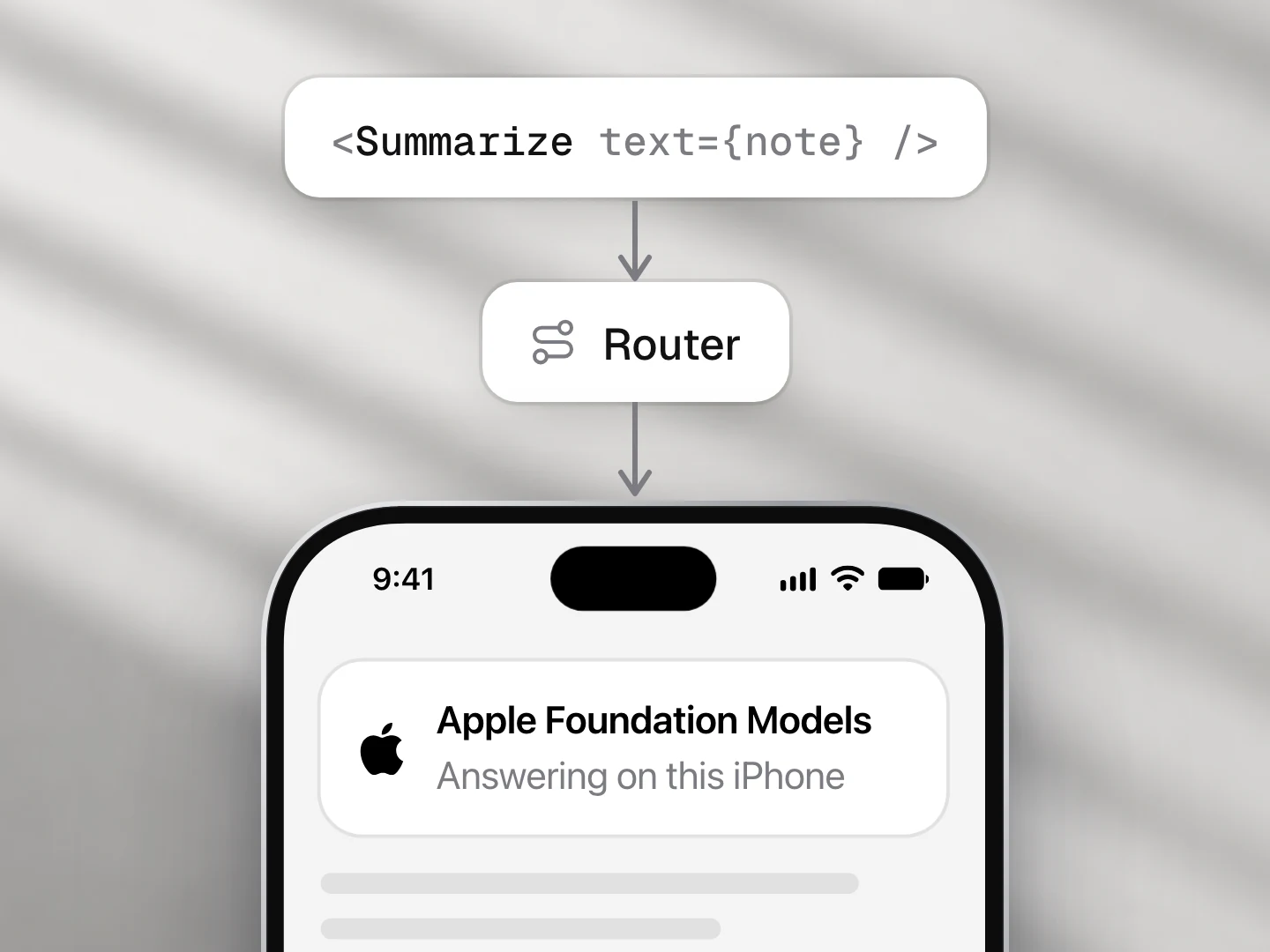
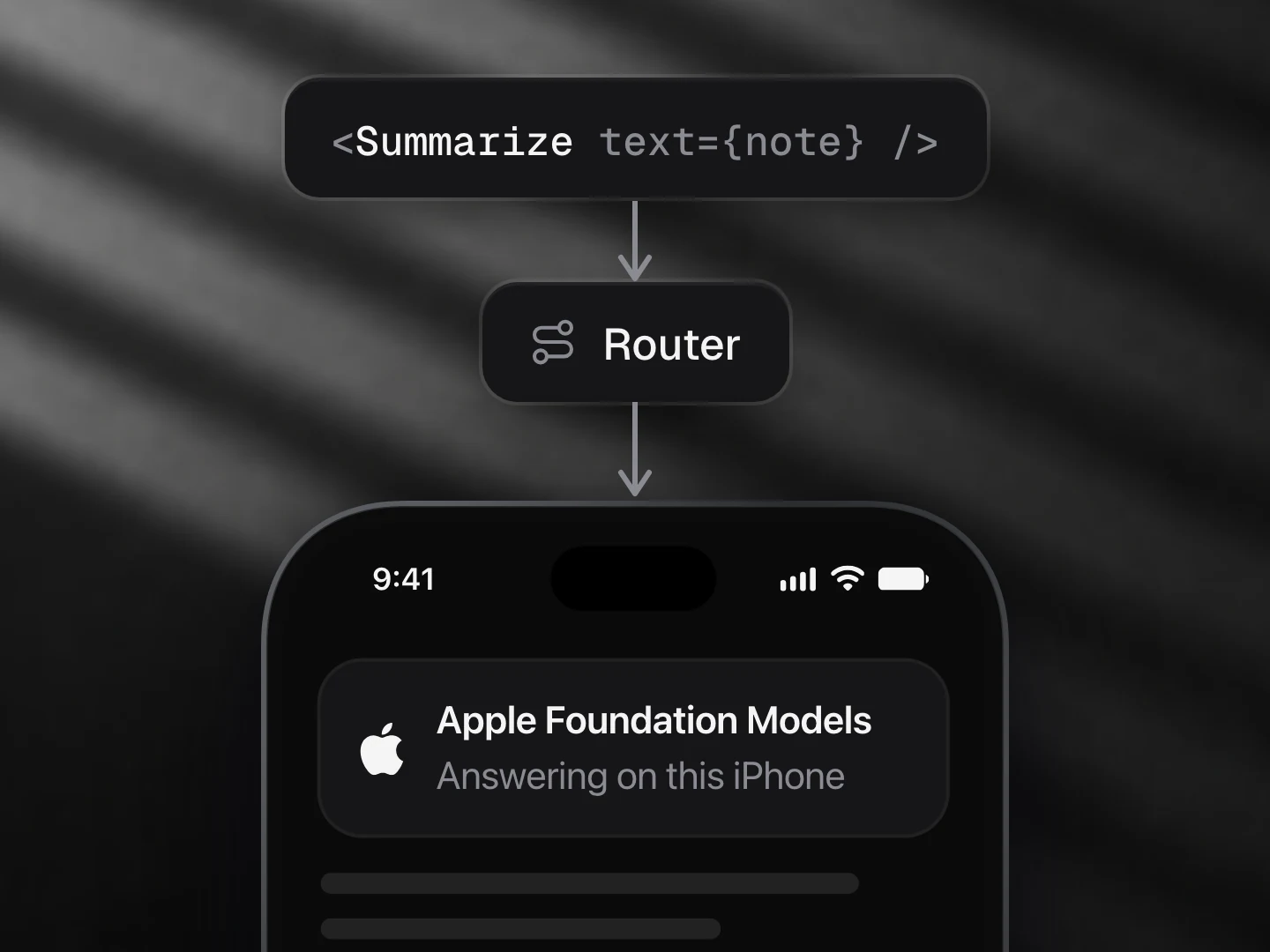
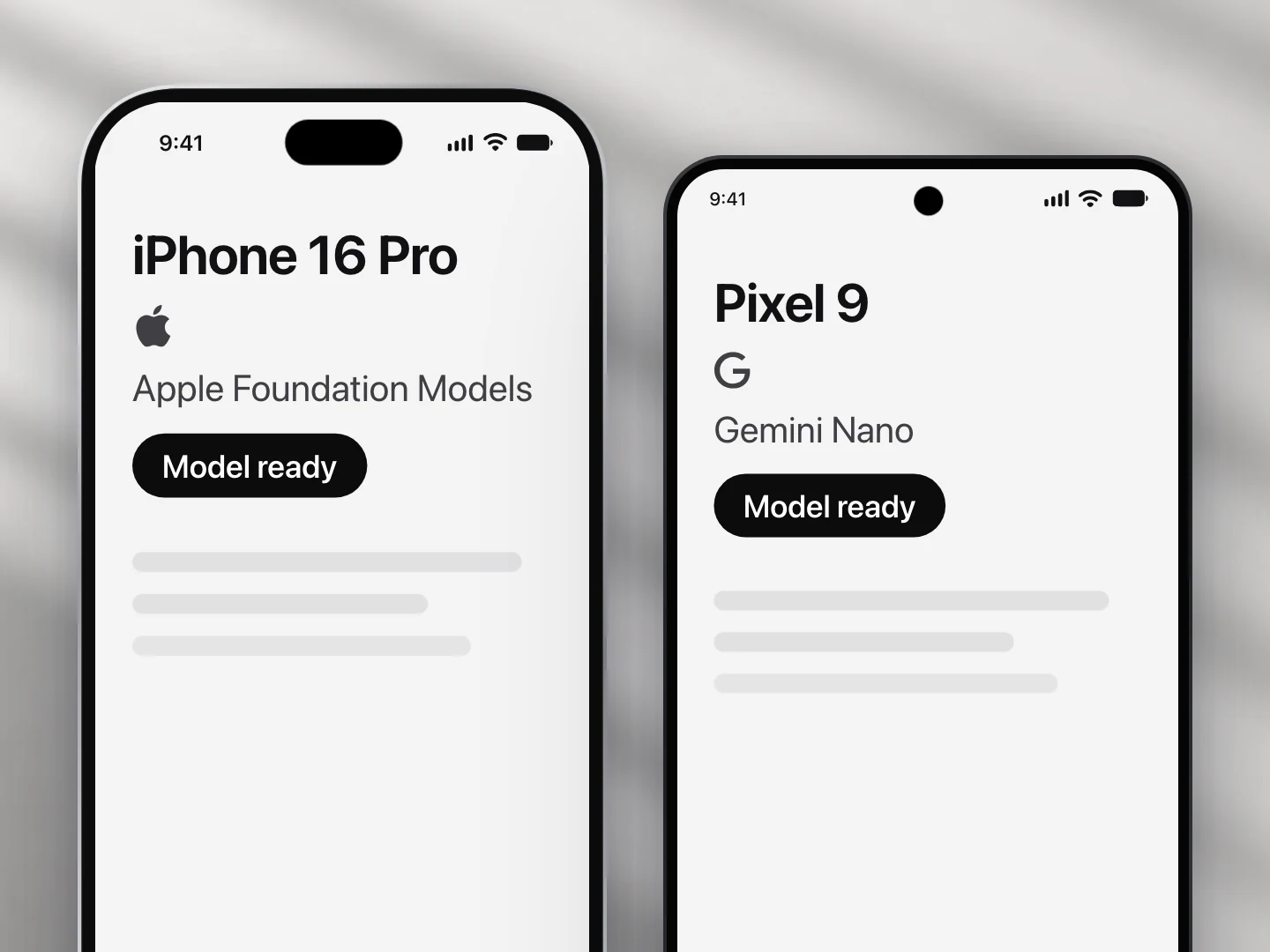
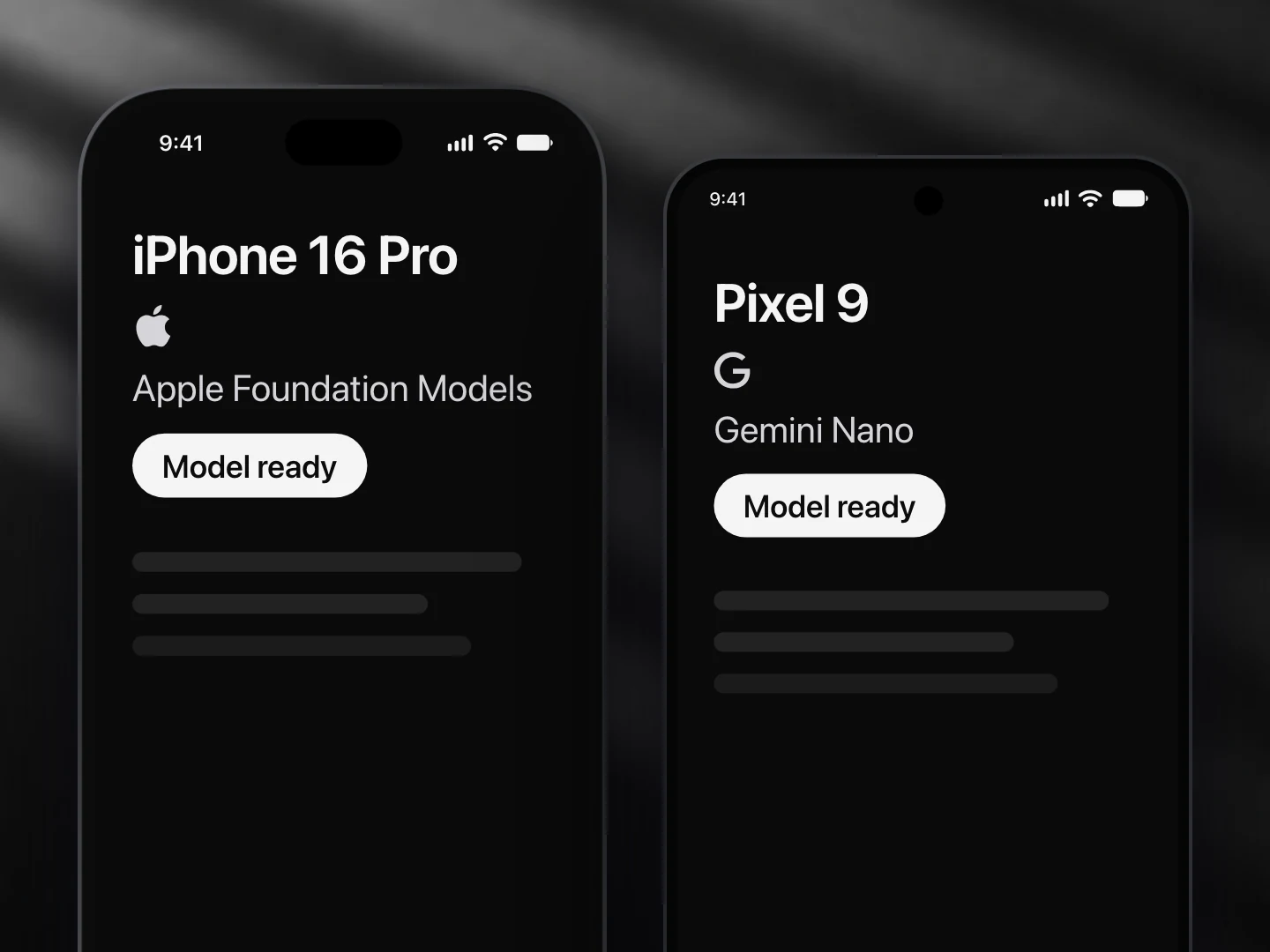
Requests declare a capability (text, structured, tools, vision, embeddings, transcription, speech). The router picks the first provider in policy.order that is ready and supports it, and returns its id so the UI can show ON DEVICE · APPLE. Cloud runs only when allowCloud is true and a cloud model is configured. Components can be marked localOnly. If the chosen provider fails before it has answered (unavailable, busy, an unknown error), the call moves on to the next ready provider; refusals, overflows and bad replies are not retried elsewhere, and nothing falls back once text is on screen.
Availability
type Availability =
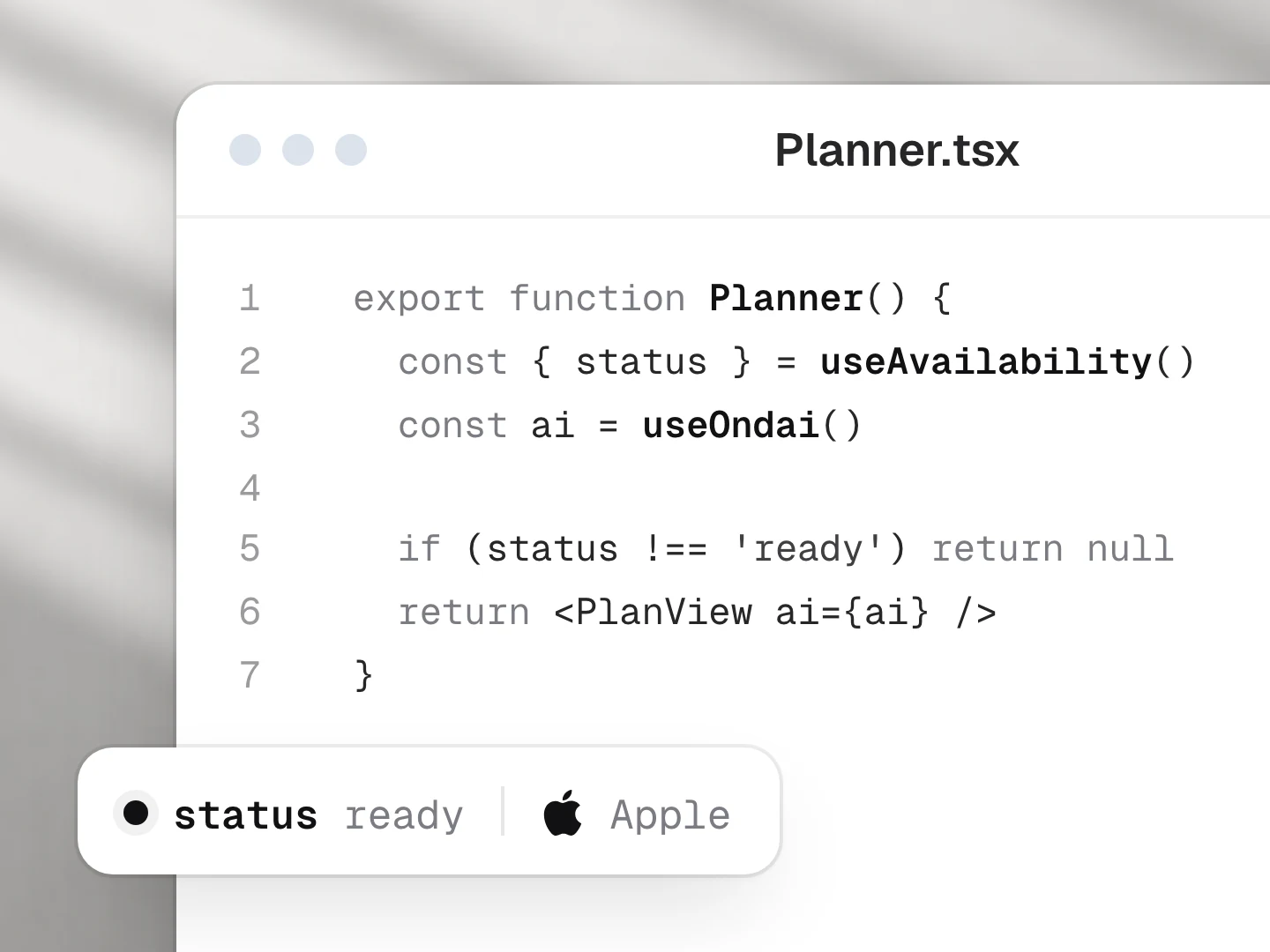
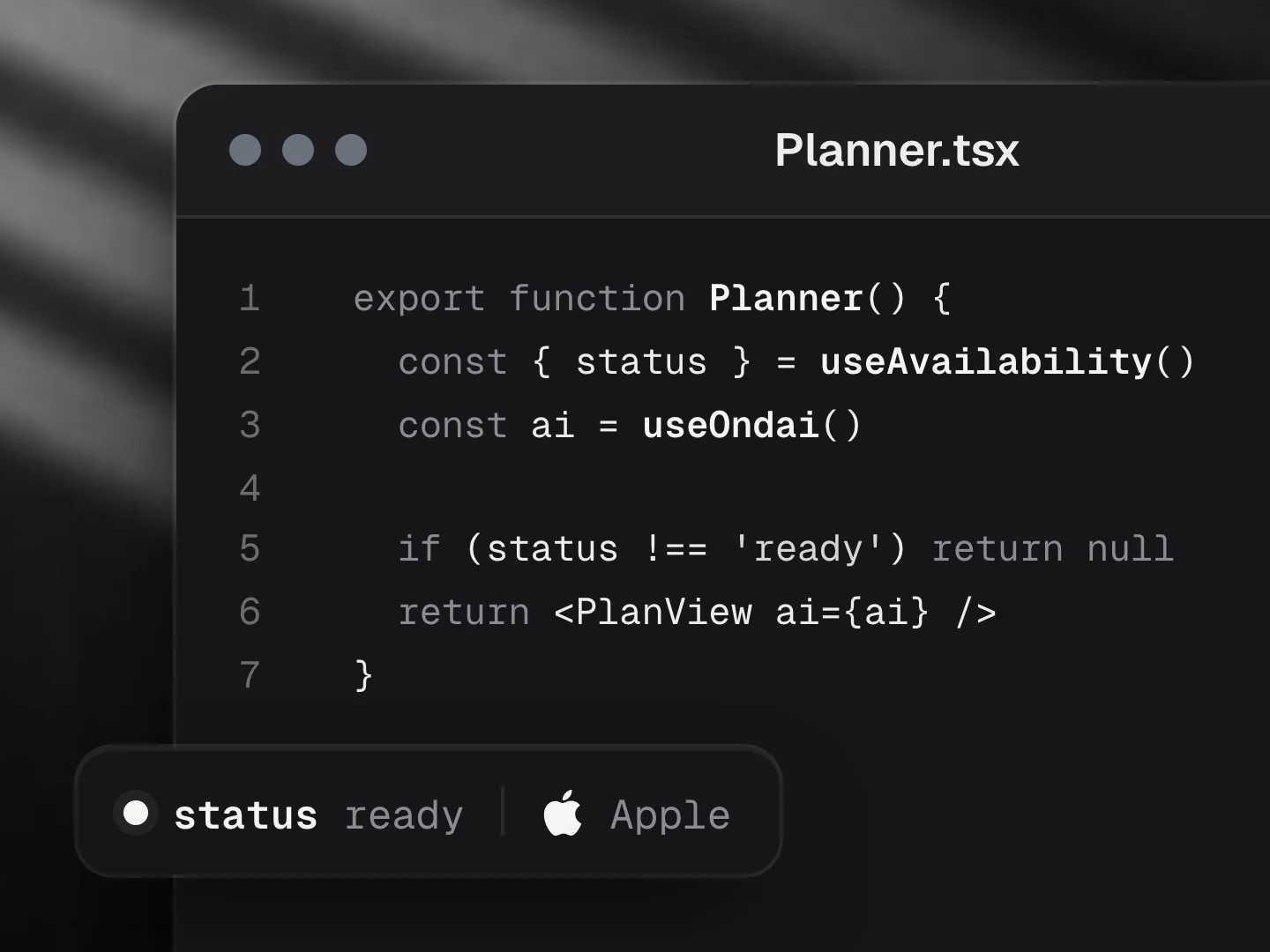
  | { status: 'ready'; provider }
  | { status: 'preparing'; provider; progress? }
  | { status: 'unavailable'; reason: 'device-not-eligible' | 'not-enabled' | 'model-downloading' | 'unsupported-os' | 'unsupported-language' | 'background-blocked' | 'quota' | 'no-provider' | 'unknown'; detail? }
Apple's provider (0.12) exposes only a boolean, so reasons are inferred defensively and the raw value is logged; availabilityCopy() turns any state into calm UI text.
Hooks
| Hook | Returns |
|---|---|
useLocalModel(capability) | { availability, isReady, provider, locality, label, prewarm, refresh } |
useStreamText({ system, prompt }) | { text, status, isStreaming, run, stop, error, metrics } |
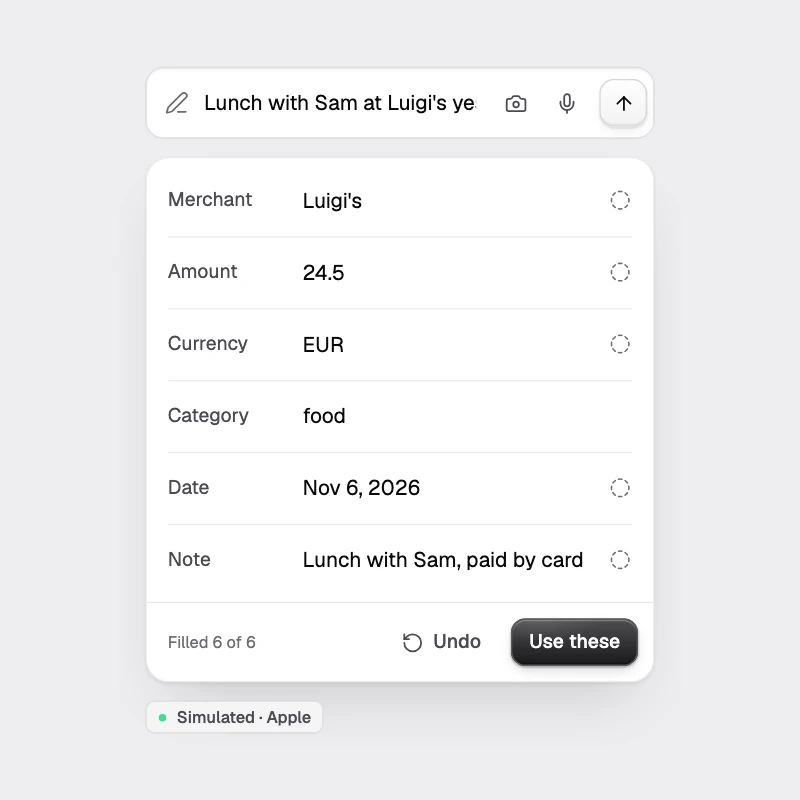
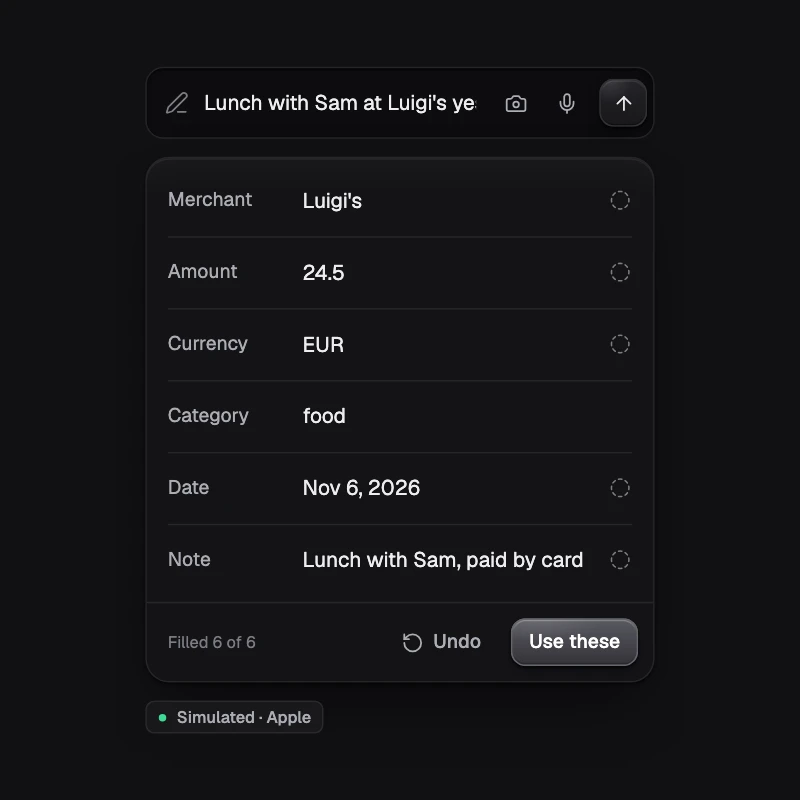
useStructured({ schema, instructions, refine }) | { object, confidence, isLoading, run, error } |
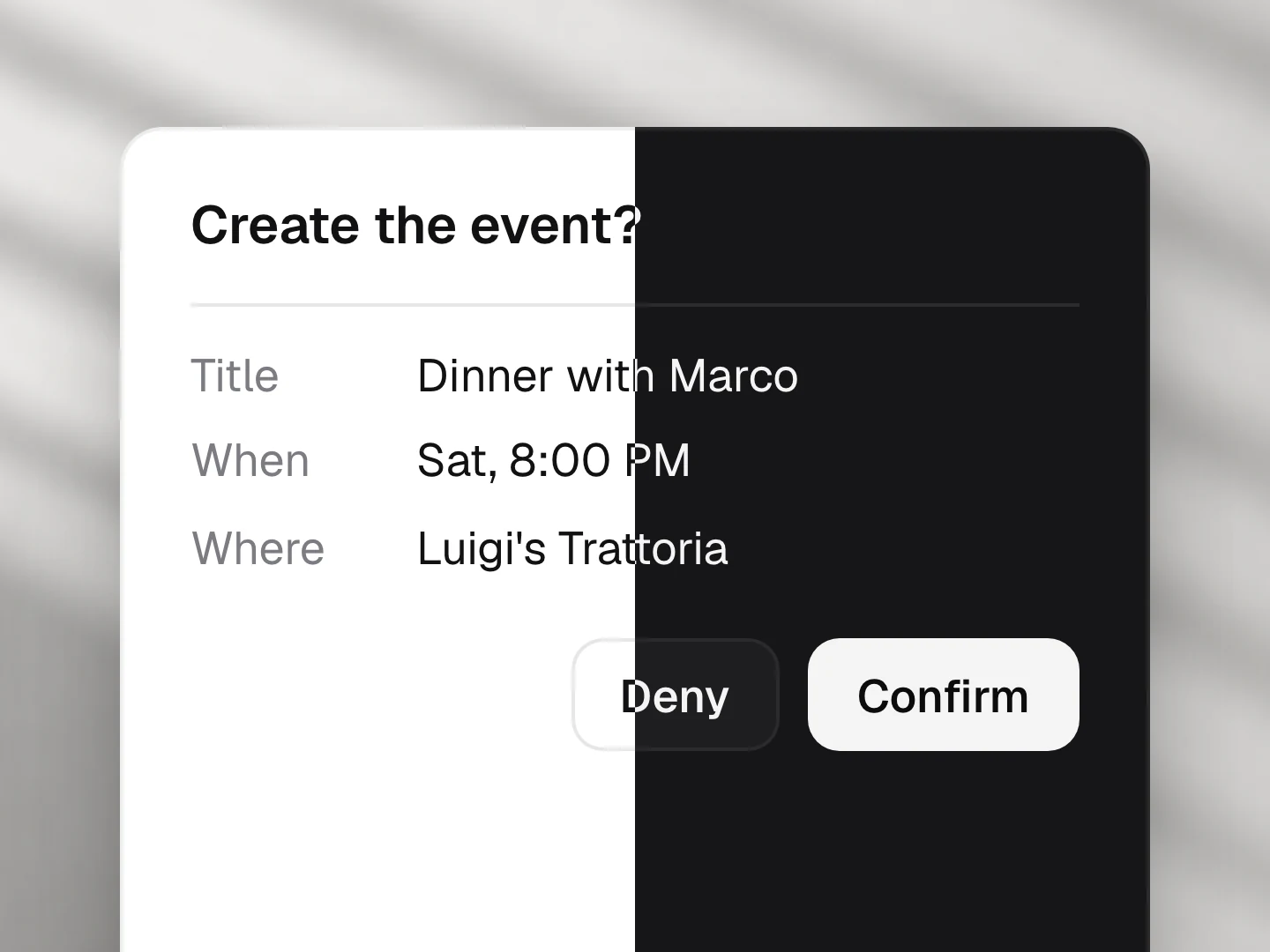
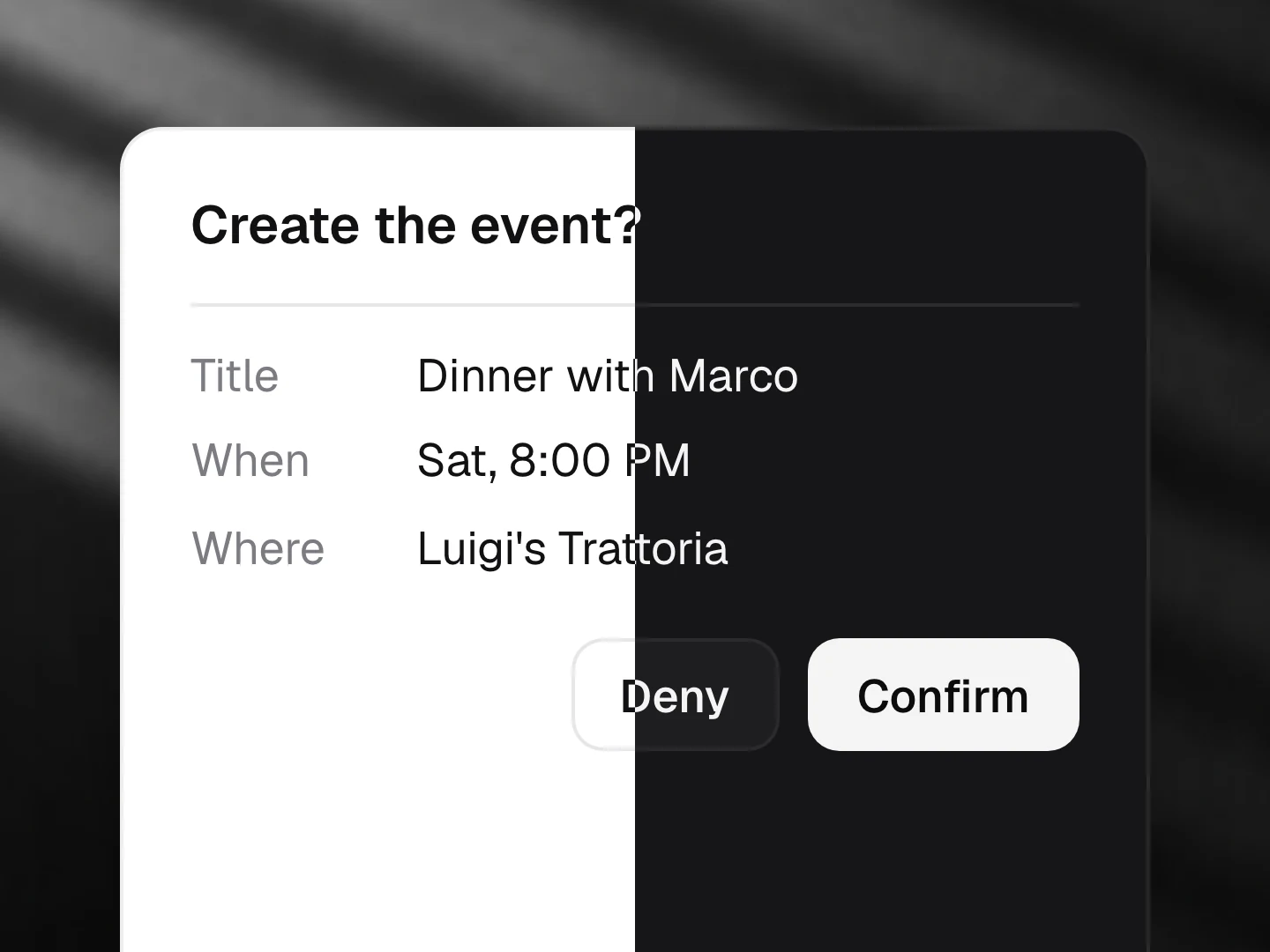
useToolAgent({ tools, meta }) | { run, steps, pendingConfirmation, confirm, cancel, text } |
useEmbeddings() | { embed, embedOne, similarity, available } |
useTranscribe() / useSpeak() | on-device speech-to-text / text-to-speech |
Every hook shares one state machine (idle → thinking → streaming → done | error | refusal | unavailable) and reports local metrics (latency, time to first token, tokens per second).
Small-model helpers
estimateTokens,chunk,truncateToBudget,mapReducefor the 4,096-token budget.matchEnum/matchEnumListfuzzy-match model output to your own lists;parseDate,parseMoney,parseNumberparse in code instead of trusting the model.describeSchema/refineObjectturn a zod object into prompt text and deterministic per-field refinement with confidence.withToolPolicywraps tools withauto | ask | neverpolicies;preselectToolskeeps only the top 3–5 relevant tools per request.createVectorIndexkeeps a local vector index (in memory, or SQLite via@ondai/core/expo) with hybrid keyword search.
Errors
Every error becomes an OndaiError with a kind (context-overflow, refusal, unsupported-language, quota, unavailable, cancelled, invalid-output, tool-error, network, unknown), a human message and the raw cause. Only context overflow and invalid output are retried: once, with a smaller budget. Never in a loop.
Mock provider
import { mockAdapter, mockScript } from '@ondai/core/mock'
const mock = mockAdapter({ script: mockScript.thinking(800).stream('Hello from the phone.', 40) })
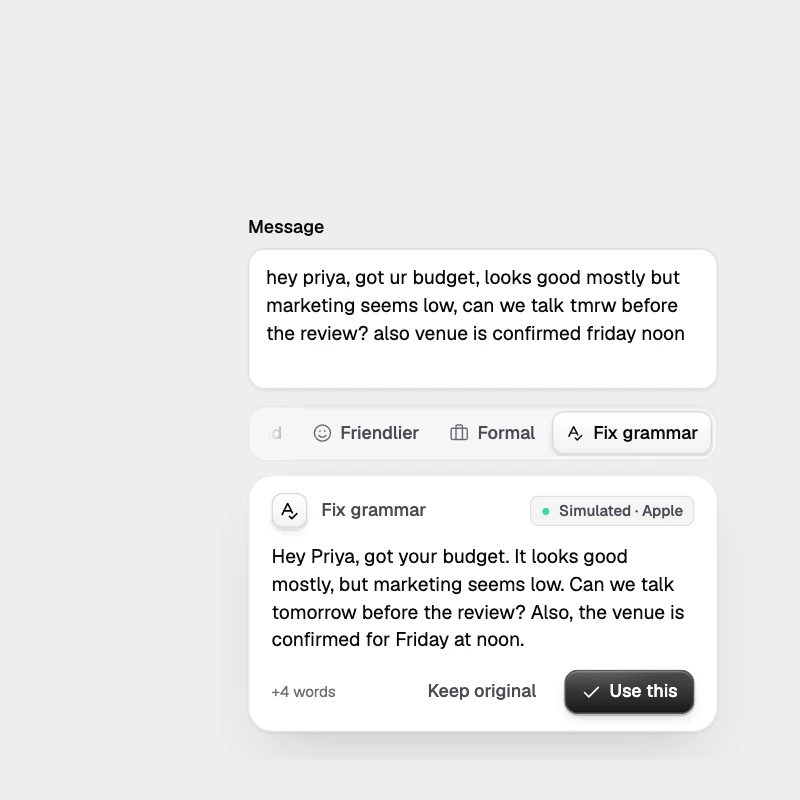
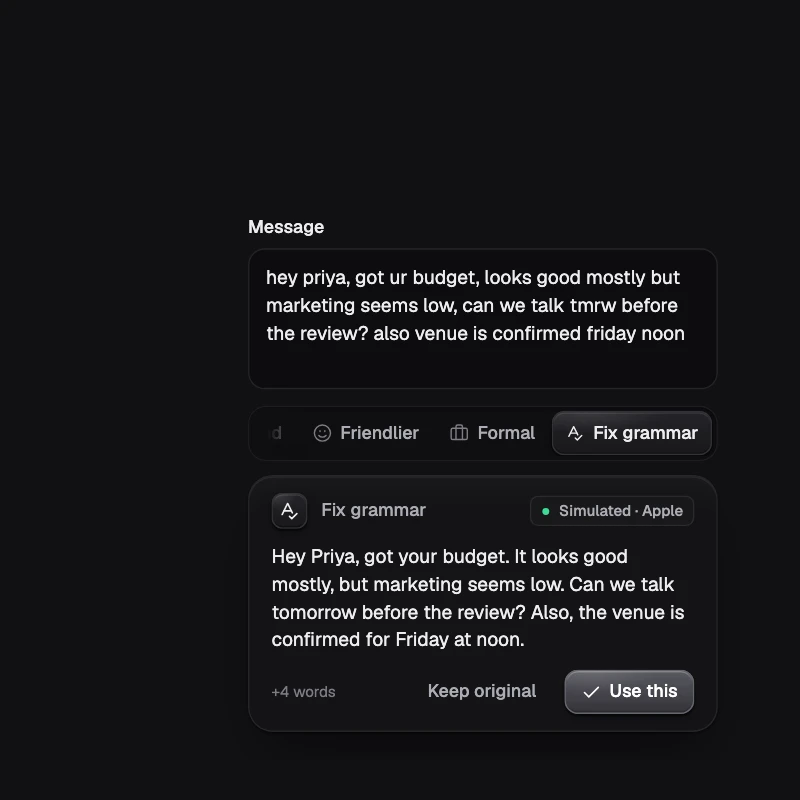
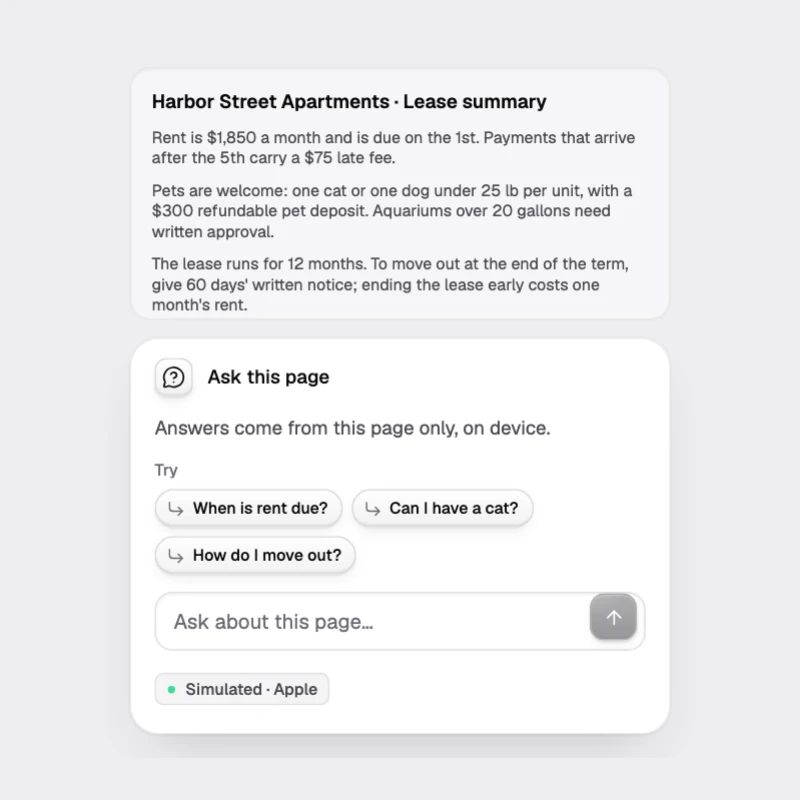
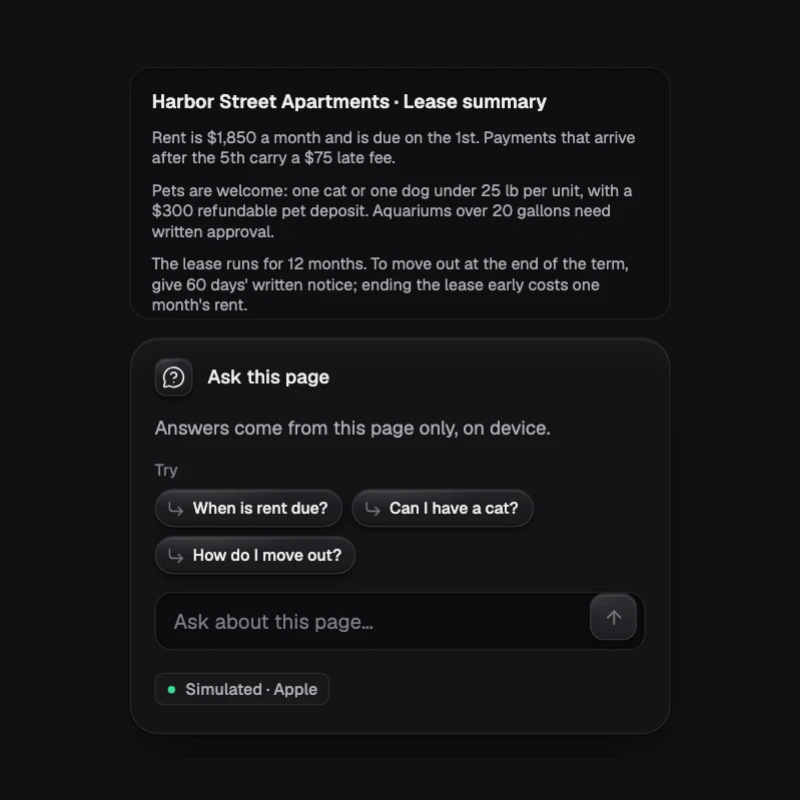
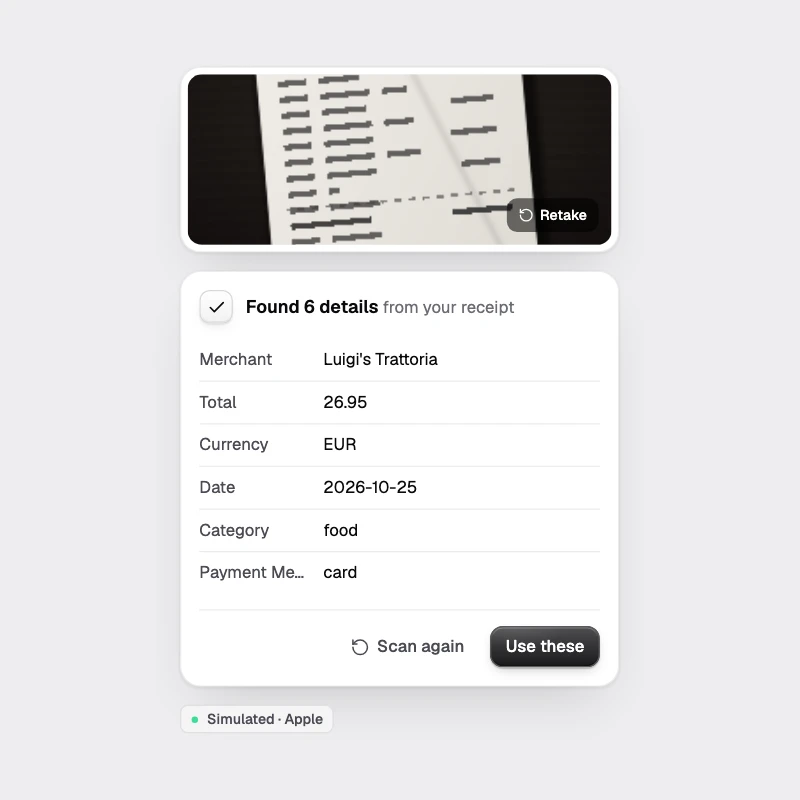
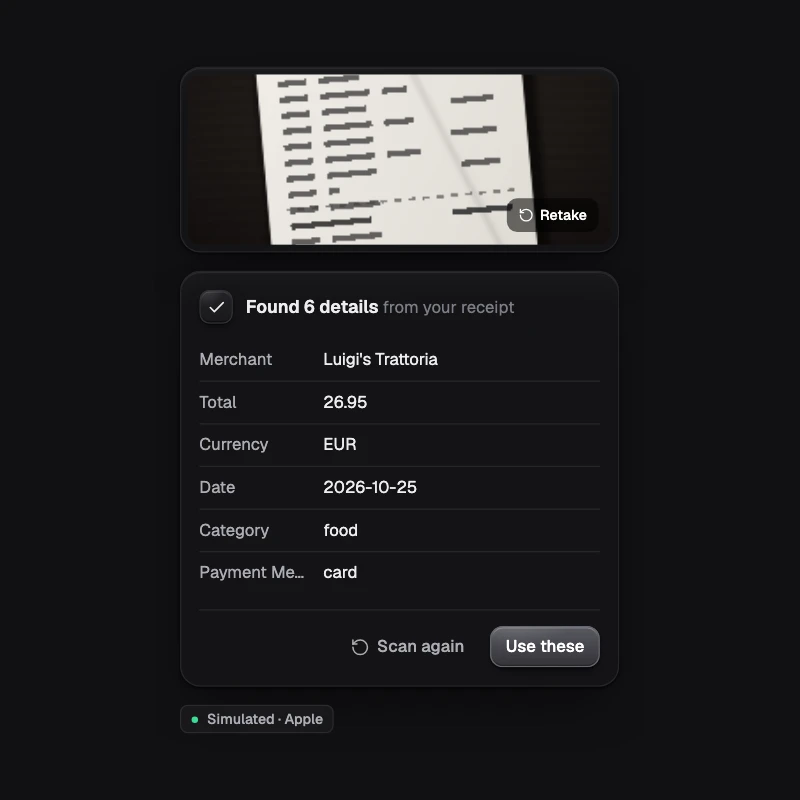
The mock is a real AI SDK LanguageModelV3, so generateText, streamText, structured output and tool calls run the real code path on the web and in tests. Scripts can stream at any rate, return objects, call tools, fail, refuse or report an unavailable device. Seeds are deterministic and a manual clock freezes frames for screenshots.